True or False. European colonisers decimated the Indigenous populations in the Caribbean. False, blatantly false.
OK, so this is in fact true for some countries and territories of the Caribbean, but is not quite an accurate declaration in relation to all of the region, as Indigenous communities, including some of those ethnic groups that featured prominently in high school history, are still alive and well, many maintaining cultures and practices that are largely unchanged since the arrival of the Europeans.
Guyana
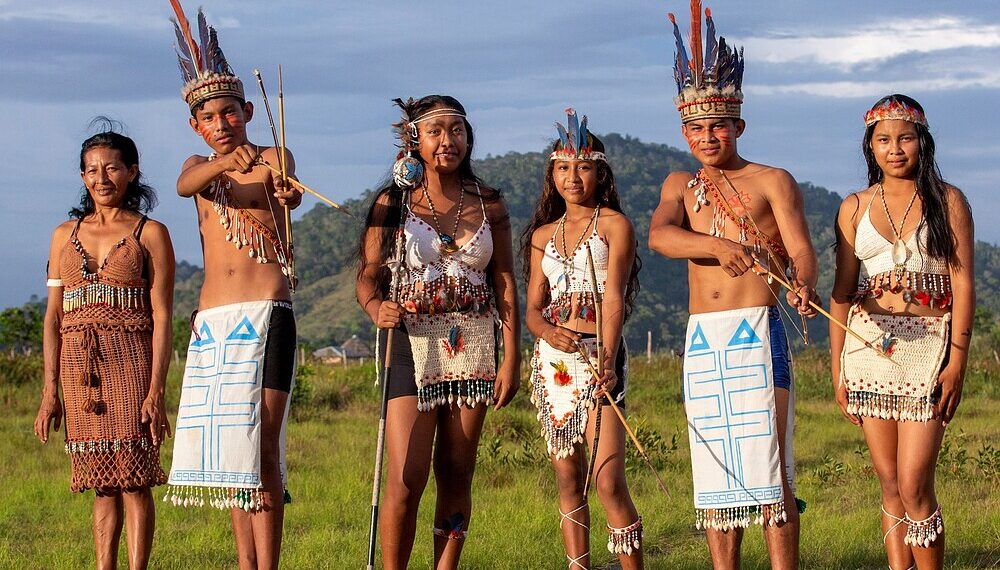
Every September, Guyana celebrates Indigenous Heritage month. It is an opportunity to honour those communities that have contributed so much to shaping the fabric of Guyanese and Caribbean society. In fact, Guyana alone is home to nine Indigenous tribes! Interestingly, two of those tribes are ones that would be very familiar to Caribbean students of history: the Lokono (Arawak-Taino) and the Kalinha (Carib-Galibi). I have found this fact especially exciting since the Tainos were more or less annihilated from the Greater Antilles. Other groups are the Warao, Akawaio, Arekuna, Wapishana, Macushi, Wai Wai, and Patamona, most of whom dwell in the dense jungles of Guyana’s interior. Indigenous peoples make up approximately 10% of Guyana’s population.
Suriname
Neighbouring Suriname is home to a an even greater number of Indigenous tribes, though the population of Amerindians is smaller. Again Arawaks (Lokono) and Caribs (Kaliña) are prominent, along with the Trio and Wayana, forming the four major groups. The Indigenous peoples of Suriname number approximately 20,000.
Belize
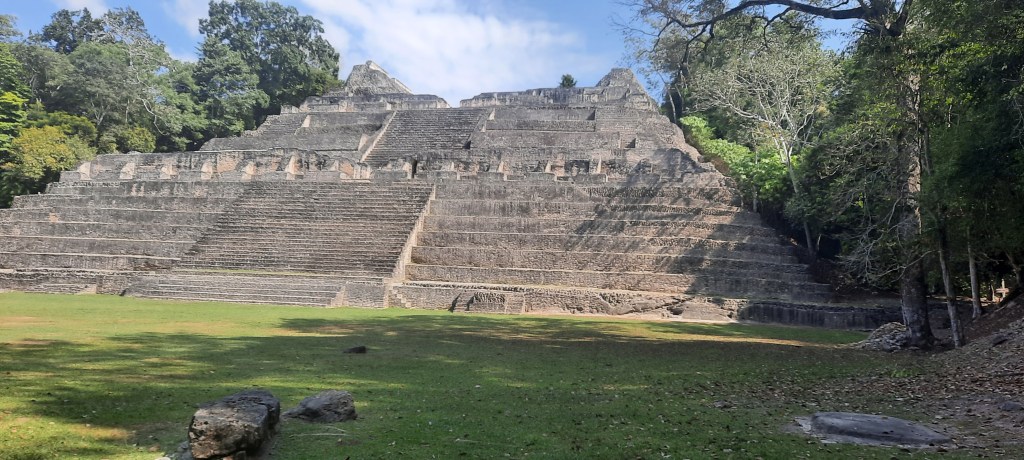
In Belize, the Maya are the direct descendants of the original inhabitants of the Yucatan Peninsula. The three groups in Belize are the Yucatec, Mopan, and Q’eqchi’. In fact, Belize was once part of the vast Mayan civilisation and still is home to numerous exquisite pyramids and temples from that era. From history classes, we would recall that the Maya were one of the most advanced ancient civilisations, best known for their architecture, advanced writing system, developments in mathematics, and especially astronomy, with the ability to monitor other planets and predict eclipses.

Belize also happens to be home to one of the most unique people groups of the region: the Garifuna (Garinagu), also referred to as the Black Caribs. These are the descendants of mixed African and Kalinago (Carib) populations originally from St. Vincent and the Grenadines, who were exiled to Honduras by the British, and eventually made their way across Central America. In Belize, the Garinagu are primarily located along the coastline.
Dominica
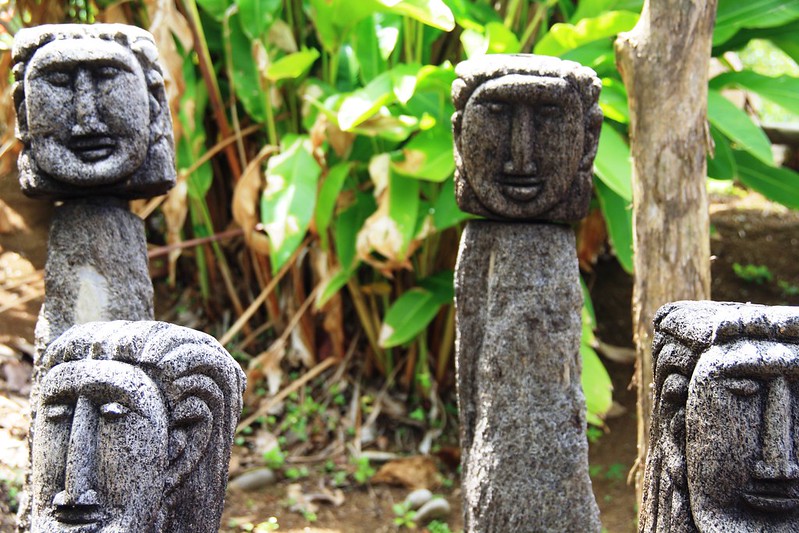
Among the Caribbean islands, Dominica stands out most when we speak of Indigenous peoples. Their ancestors are believed to have settled in Dominica around 1000 AD. The population of indigenous people living in the Kalinago Territory in eastern Dominica is not large, and numbers approximately 3,000 persons. While dances, traditions, legends, and beliefs have been passed on through generations, only few Kalinago now speak their ancestors’ language.
An Enduring Cultural Footprint
Indigenous communities are alive and well all over the Caribbean. Although their visible presence in the insular Caribbean is now essentially restricted to one island, Dominica, they still retain a robust presence in the continental or mainland Caribbean, including in those countries generally considered the Greater Caribbean. Nonetheless, even among Caribbean islands, the influence of our Indigenous ancestors is not entirely lost. Cassava bread/bammy, pepperpot, and jerk chicken owe much to them, as do words such as annatto, barbecue, manatee, and guava, which now form part of the English lexicon. No, our Indigenous peoples were not wholly decimated. They survive in their direct descendants all over the region, the millennia-old traditions that continue to this day, and the way their lingering influences have shaped the contemporary Caribbean.

 In Our Neighbourhood
Leave a comment