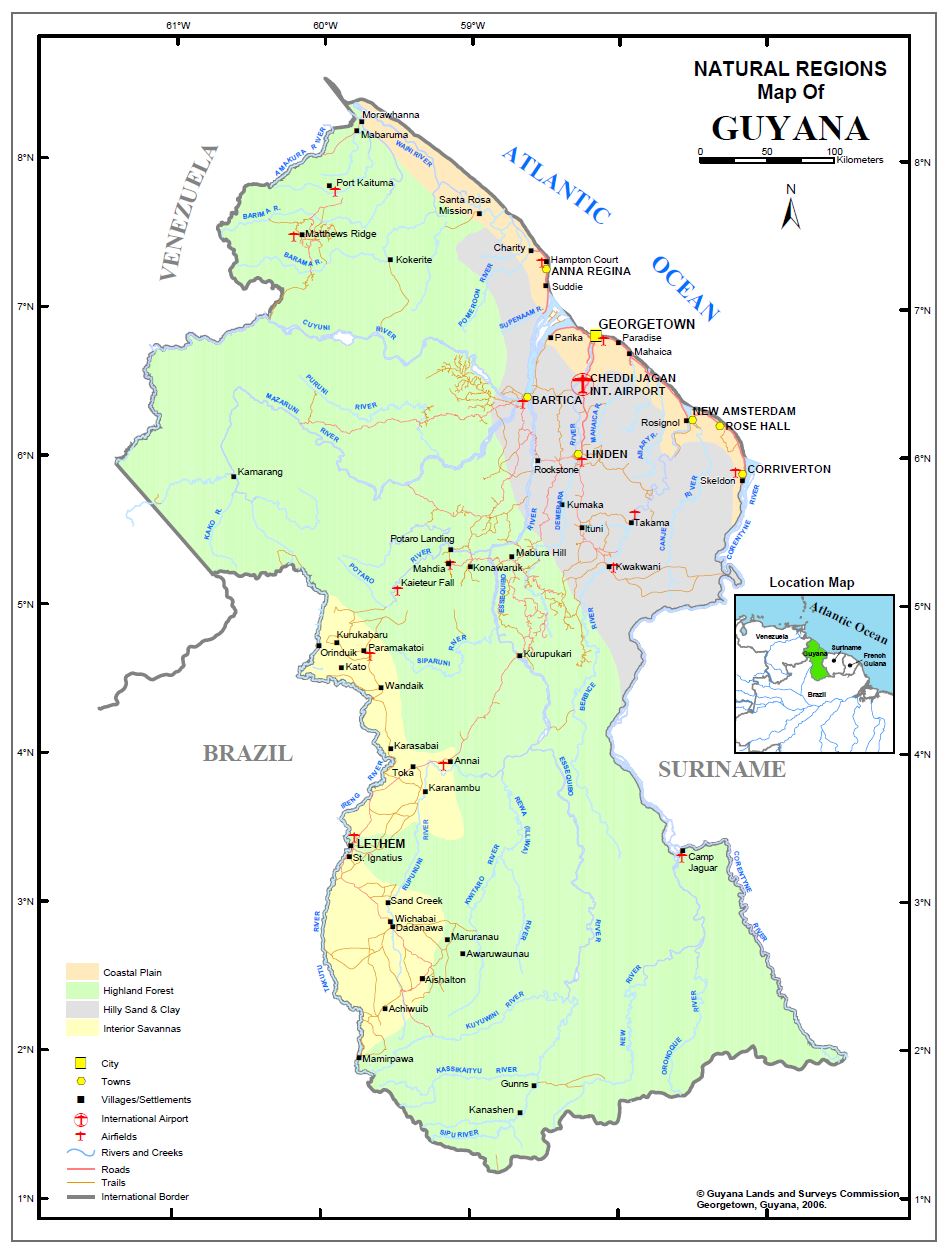
A little while back, a Jamaican comedian went viral for suggesting Guyana wasn’t “truly” Caribbean. He intimated that other Caribbean people sought to accommodate Guyana in our collective spaces out of pity, tradition, or some other factor. His reasoning? Maps. Naturally, Guyanese weren’t too thrilled and as a self-proclaimed Caribbean enthusiast, neither was I. After all, every Jamaican child learns in primary school that Guyana is a Caribbean country.
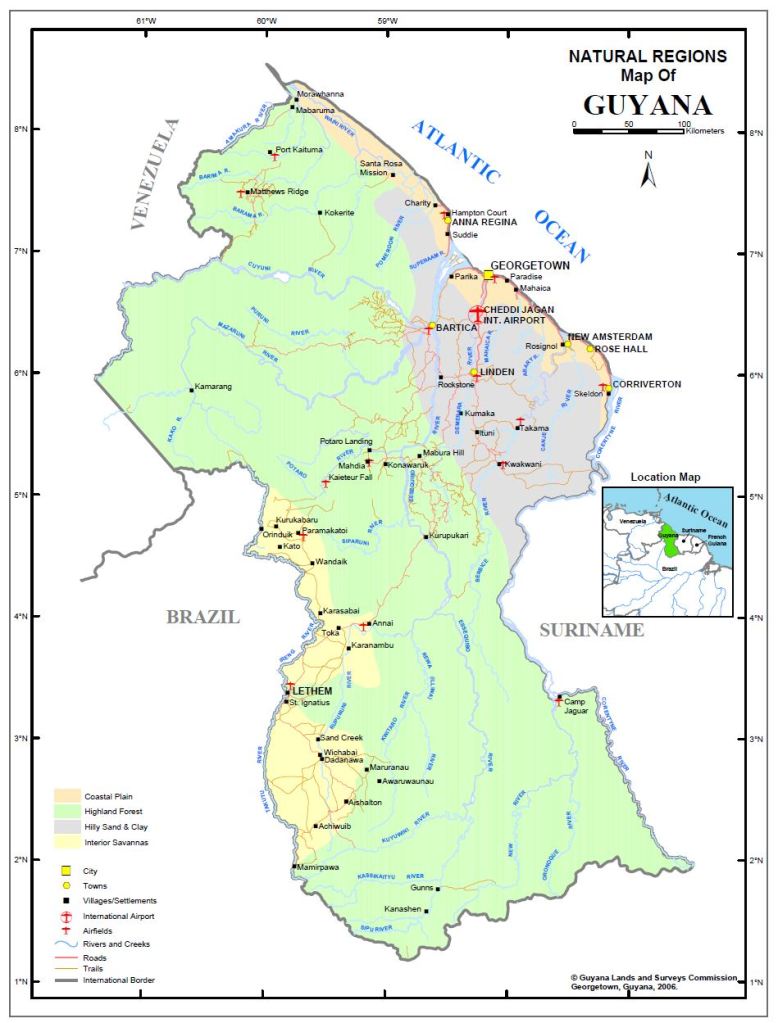
I mean, the comedian was technically right: Guyana is physically located in South America. In the Caribbean and in so many other places, however, identity extends beyond a pin on a map. History, culture, politics, and demographics are often better indicators of identity. In case there are more people who think like this comedian, here are a few reasons why, primary school education apart, I see Guyana as being as Caribbean as the rest of us.
1. History
Like Jamaica, Guyana was “discovered” by Christopher Colombus and was a British colony up to independence in 1966, although it changed hands among the British, French, and the Dutch throughout its colonial history. No other South American country was a British colony. The importation and enslavement of Africans and the use of Indian indentured labour by the British is another common theme. What that has meant is a large Indian and Black population (among others), not unlike Trinidad and Tobago’s. This is a demographic pattern replicated elsewhere in the Caribbean, like Jamaica, but with a decidedly smaller Indian population. In short, Guyana’s history accords it a shared cultural and political DNA with the rest of the Caribbean.
2. Culture
Guyana’s cuisine is another easily identified link with the rest of the Caribbean, particularly the English-speaking countries. Indo-Guyanese cuisine, with delights such as roti, curried meats, and chutneys, wouldn’t feel out of place in any Caribbean kitchen. The influence of West Africa and Britain is also evident in dishes like cook-up rice (a cousin to the Eastern Caribbean pelau) and rock buns. Furthermore, when Christmas comes around, Guyanese celebrate with sorrel and black cake, just like their island neighbours.
Beyond food, there’s a shared rhythm to Caribbean life. Carnival, reggae, soca, calypso, cricket, similar-sounding creoles, and mischievous spirits like Old Higue or Soucouyant are all part of the Caribbean cultural landscape. Culturally, Guyana simply feels more Caribbean than South American in my travel experience. Furthermore, it begs to be said that it was the Guyanese PM, Forbes Burnham, who spearheaded the establishment of the Caribbean Festival of Arts (CARIFESTA) in 1972, which continues today, although interest seems to have waned in recent years.
3. Regional Politics
Politically, Guyana is more connected to the Caribbean than South America. Guyana is a founding member of the Caribbean Community (CARICOM), along with Jamaica, Trinidad and Tobago, and Barbados. This means Guyana coordinates very closely with other Caribbean countries in a way it does not with South America. In fact, Guyana recently hosted the 46th Regular Meeting of the Conference of Heads of Government of CARICOM. Caribbean countries at international fora, such as the United Nations, the Organisation of African, Caribbean, and Pacific States, and the Commonwealth also firmly recognise Guyana as one of their own and support and promote Guyanese interests as such.
4. What the Guyanese Think
Clearly Guyana is a diverse country demographically and geographically and there are nuances of identity, but the Guyanese are taught their Caribbean connection from an early age, so it is largely ingrained. Unfortunately, it must be said that in the past, many Guyanese immigrants were treated as second-class citizens in some Caribbean countries. I suspect that this was not based on a failure to recognise the Guyanese as Caribbean, but rather the xenophobia common in many host countries when citizens themselves feel somehow displaced by foreigners.
While that situation might have created some resentment on the part of many Guyanese, it certainly does not negate their Caribbean identity, much like fussing with your sister does not make her less your sister. Overall, while I can offer no empirical evidence, if my exchanges with Guyanese and social media are worth relying on, it seems most Guyanese see themselves as part of the Caribbean family.
Conclusion
Identity is rarely black and white. Consider Barbados, firmly ensconced in the Atlantic Ocean but undeniably Caribbean, due to its cultural ties. So why is there a struggle to accept Guyana?
Sure, Guyana sits on the edge of South America, and it has nine Indigenous groups, some with connections to other South American regions. In recent years, the country has even shown more interest in strengthening diplomatic and political ties with South America. But this was not intended to and does not erase its longstanding political and cultural connections to the Caribbean.
Incidentally, I have not met a single “born and bred” Caribbean citizen who questioned Guyana’s place in the region. Now, I have no intention of starting any Diaspora wars, but I am left to wonder if the confusion might reign only among some descendants of Jamaicans abroad not educated in the Jamaican school system and who simply do not have the same level of appreciation for the Caribbean region’s intricate historical, political, and cultural tapestry. It would be interesting to know.
So, what do you think? I would like to hear your opinions on this controversial topic!
Special Thanks to Vidyaratha Kissoon for the information and insights he provided on Guyana. Check out his thought-provoking posts on Guyana and the Caribbean on his blog, Thoughts of a minibus traveller.



 In Our Neighbourhood
Leave a comment